The Environmental Impact of Going Cashless: Facts vs Myths
Does going cashless actually help the environment? We analyze the full lifecycle environmental impact of cash versus digital payments — from ATM electricity to data center energy consumption.
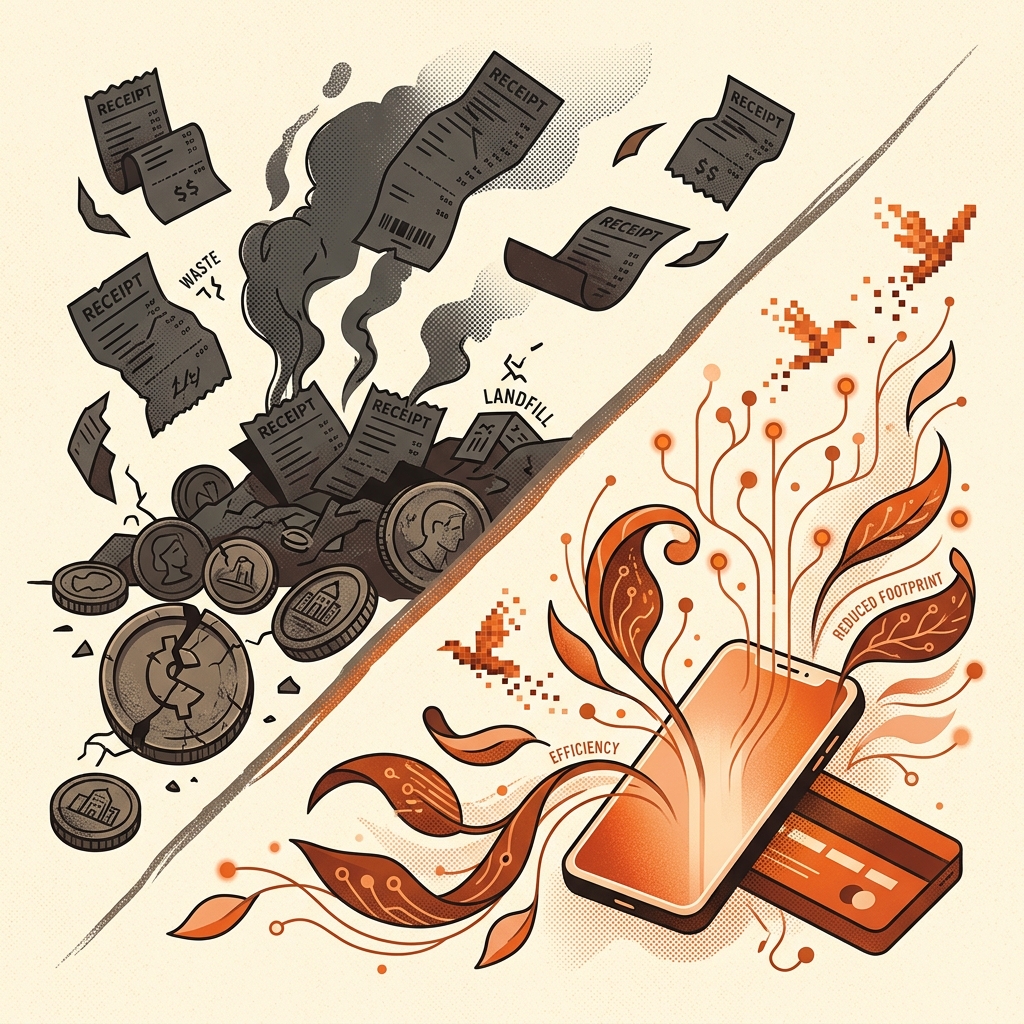
“Going cashless saves trees.” You’ve heard this argument. It sounds intuitive — no paper bills means fewer trees cut down. But the full environmental picture is more nuanced than that soundbite. Digital payments run on data centers, smartphones, and network infrastructure, all of which have their own environmental footprint. Let’s do the math.
The Environmental Cost of Cash
Physical cash has a surprisingly large environmental footprint across its lifecycle:
Production
- Paper notes: Indian currency notes are printed on a cotton-based substrate (not wood pulp, so the “saving trees” argument is partially a myth). The production requires water, energy, chemical treatments, and specialized inks. The RBI’s printing presses in Nashik and Dewas consume significant electricity and water.
- Coins: Metal extraction (steel, copper, zinc, nickel) for coin production involves mining, smelting, and transportation — all carbon-intensive processes. India mints approximately 2,000 crore coins annually.
Distribution
Cash needs to be physically transported from printing presses to RBI offices, then to commercial banks, then to ATMs and branches. This distribution network involves:
- 2,50,000+ ATMs across India, each consuming 3-5 kWh of electricity daily (for the machine, air conditioning, and security systems)
- Armored cash-in-transit vehicles making thousands of trips daily
- Bank branch operations dedicated to cash handling
Estimated energy: India’s ATM network alone consumes approximately 3-4 billion kWh annually — equivalent to powering 2-3 million households.
Disposal
Currency notes have a lifespan of 3-5 years before they become too soiled or damaged. The RBI destroys approximately 2,000 crore notes annually. The shredded currency is typically compressed and incinerated, releasing carbon emissions. Coins last longer but are eventually recalled and melted for re-minting.
The Environmental Cost of Digital Payments
Digital payments aren’t environmentally free either. Their footprint comes from:
Data Centers
Every UPI transaction is processed through data centers operated by NPCI, banks, and payment service providers. These data centers consume electricity for computing and cooling:
- Global data center energy consumption: ~200-250 TWh annually (1-1.5% of global electricity)
- India’s data center energy usage is growing 25-30% annually
- A single digital transaction consumes approximately 0.5-2 watts of server energy
However, the energy per transaction is extremely small. UPI processes approximately 12 billion transactions per month. Even at 2W per transaction, the total energy for UPI is roughly 24 GWh per month — a fraction of what ATM networks consume.
Smartphones and Infrastructure
The manufacturing footprint of smartphones is significant — each device requires rare earth minerals, generates approximately 70-80 kg of CO2 in production, and creates electronic waste at end of life. However, smartphones serve hundreds of purposes beyond payments; attributing their environmental cost solely to payment functionality would be misleading.
Network infrastructure (cell towers, fiber optic cables, exchanges) also has a carbon footprint, but again, payments are one of thousands of services running on this shared infrastructure.
The Comparison: Cash vs. Digital
Several academic and industry studies have attempted to quantify this comparison:
| Factor | Cash | Digital Payments |
|---|---|---|
| Per-transaction energy | High (ATM + transport + handling) | Low (server electricity) |
| Infrastructure energy | Very high (ATMs, armored vehicles, bank branches) | Medium (data centers, shared with all other internet services) |
| Material resources | High (cotton, metal, ink, paper) | Low to medium (shared device and network costs) |
| Water usage | High (currency production) | Low |
| Carbon footprint per transaction | 4-5g CO2 (estimated) | 0.5-1g CO2 (estimated) |
The consensus from available research: digital payments have a 3-5x lower carbon footprint per transaction compared to cash, primarily because they eliminate the energy-intensive physical production, distribution, and ATM network.
The Nuanced View
Where Cash Is Environmentally Superior
In some specific scenarios, cash has environmental advantages:
- Duration of use without infrastructure: A coin lasts decades and can be reused thousands of times without any electricity. Digital payments require always-on internet and powered devices.
- No electronic waste: Cash doesn’t become e-waste. Smartphones do, and their disposal creates toxic contamination if not recycled properly.
- Low-tech areas: In regions without reliable electricity or internet, the infrastructure required to enable digital payments (cell towers, generators, devices) has a higher marginal environmental cost.
Where Digital Is Clearly Better
- High-volume transaction environments: In cities processing millions of transactions daily, the per-transaction environmental cost of digital is dramatically lower than maintaining the equivalent cash infrastructure.
- Reducing the ATM footprint: Every reduction in ATM usage translates directly to energy savings. India’s ATM network consumes as much electricity as some small cities.
- Paper reduction: While notes aren’t made from trees, the chemicals, water, and energy in production are substantial. Digital eliminates this entirely.
The Bigger Picture
The environmental argument for going cashless is real but shouldn’t be overstated. The most significant environmental benefits of digital payments are:
- Reduced transportation emissions from cash logistics
- Lower ATM energy consumption as usage declines
- Elimination of currency production resources
The most significant environmental costs of digital payments are:
- Growing data center energy demand
- Smartphone manufacturing and e-waste
- Network infrastructure maintenance
On balance, a shift toward digital payments is environmentally positive — but the gains are incremental, not transformative. Going cashless won’t save the planet, but it is one of many small shifts that collectively contribute to lower resource consumption.
What You Can Do
If environmental impact matters to your payment choices:
- Extend your smartphone’s life: Using your phone for 4 years instead of 2 cuts its per-year environmental impact in half
- Prefer UPI over card machines: UPI transactions use less energy than the merchant’s POS terminal infrastructure
- Recycle devices properly: When you upgrade, recycle your old phone through authorized e-waste collectors, not the trash
- Reduce overall transaction volume: The most environmental payment is the one you don’t make. Mindful spending is the ultimate green finance strategy
The environmental case for cashless living is moderate — it’s not the primary reason to go digital. But combined with the convenience, security, and financial tracking benefits, it’s another factor in favor of the digital payment direction the world is already moving.
PayWise Team
Personal finance enthusiast and tech writer at PayWise. Passionate about making digital finance accessible to everyone through practical, experience-based guides.